
VRS Client Insights
The Candidates Who Never Click "Apply"
When recruiting, we naturally spend a lot of time thinking about the candidates who apply to our vacancies. But what about the people who see your vacancy, and could be a great fit, but don’t apply?
This month we asked our LinkedIn community:
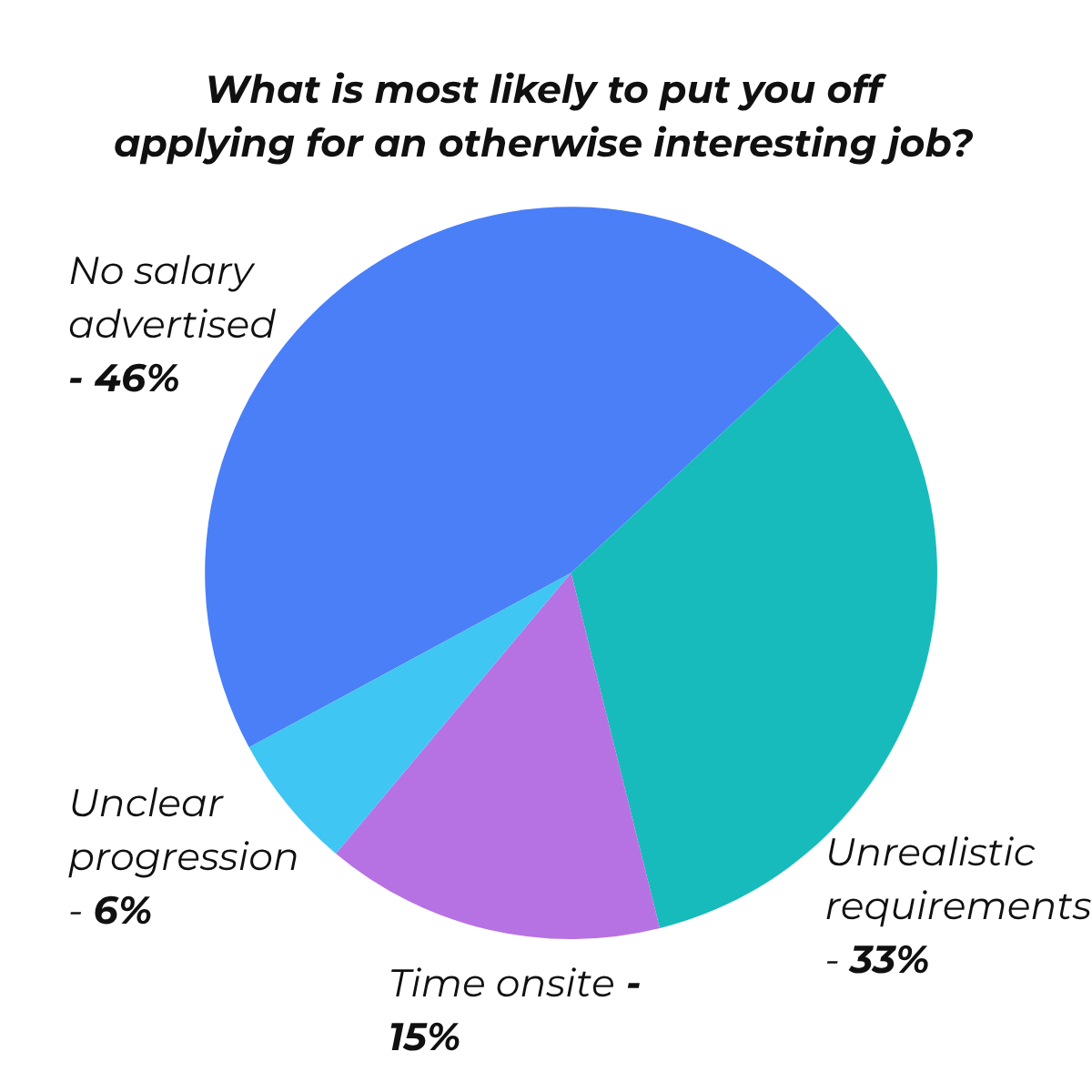
The biggest deterrent was where ‘no salary was advertised’, with 46% of the vote, closely followed by ‘unrealistic requirements were listed’ at 33%.
Perhaps the most interesting takeaway is that, combined, almost 8 in 10 respondents chose something that happens before the recruitment process has even begun.
Are job adverts screening people out too early?
A job advert needs to help candidates decide whether an opportunity is right for them, but it can also unintentionally persuade good people that it isn't.
Salary
With 46% of respondents saying that no advertised salary would put them off applying, salary transparency was the clear winner in our poll. Candidates may assume a role won't meet their expectations and move on rather than invest time finding out or simply dislike the lack of transparency.
This isn't just changing candidate preference. Across the EU, new pay transparency rules give candidates the right to know the initial salary or pay range before interview, with individual countries implementing these requirements into national law. The UK could be heading in a similar direction. The Government is currently consulting on proposals that would require employers to publish pay information in job adverts or provide it in writing before interview where no advert is used.
Whether or not it ultimately becomes a legal requirement in the UK, our poll suggests candidates aren't waiting for the legislation - many already expect transparency.
Requirements
Requirements are perhaps more interesting. Some experience and technical skills genuinely are of course essential, but lengthy wish lists can make a role appear far more restrictive than it really is, particularly when "nice to haves" are perceived as non-negotiables.
There's an often-repeated claim that women are less likely than men to apply for roles unless they meet every listed requirement. While the famous "100% vs 60%" statistic isn't supported by robust research, studies do suggest that women tend to want to feel more prepared before putting themselves forward.
More importantly, research involving 60,000 job-ad viewers found that removing optional and unnecessary requirements increased applications by 7% across both men and women.
Separating genuine essentials from the "nice to haves" could encourage perfectly capable candidates to put themselves forward rather than ruling themselves out before you've even had a conversation. The lesson isn't to lower the bar: it's to be clear about where the bar actually is. Unlike a candidate who applies and isn't suitable, you'll probably never know about the potentially excellent candidate who decided not to apply.
Before you advertise
It might be worth looking at your next vacancy from the other side of the screen.
Is the salary clear? Are the genuine essentials obvious? And are you giving potentially great candidates reasons to apply OR reasons to rule themselves out?
Sometimes the recruitment challenge isn't finding the right candidates. It's making sure they don't discount you before you've had the chance to meet them.
VRS News!
Earlier this month we were in Leeds exhibiting at the annual BMSS meeting; it was great to catch up with so many of you! We also hosted the Careers Workshop, bringing together speakers from across the mass spec community to showcase the variety of career paths available and share practical advice on how to position yourself for them.
Next month, we're switching from mass spec to life sciences as we join ELRIG at Drug Discovery 2026, supporting the MiniDD event and sharing careers advice with early-career scientists. We'll be at the main meeting afterwards too, so hope to see some of you there!
